
Proven Invisalign Marketing Strategies to Attract More Patients


Introduction: Why Invisalign Marketing Deserves a Dedicated Strategy
Invisalign has reshaped the orthodontic landscape, offering a discreet, comfortable alternative to traditional braces. According to the American Association of Orthodontists, clear‑aligner therapy now accounts for over 30% of all orthodontic cases in the United States. That rapid adoption creates a massive opportunity for dental practices—*if* they can reach the right audience with the right message.
However, Invisalign is not a generic service you can market the same way you would a routine cleaning. Prospective patients are typically motivated by aesthetics, convenience, and lifestyle considerations. They also tend to research extensively online before committing to a multi‑year treatment plan. This means a successful Invisalign marketing campaign must blend educational content, trust‑building social proof, and precise targeting across both digital and offline channels.
Section 1: Understanding Your Ideal Invisalign Patient (The “Who”)
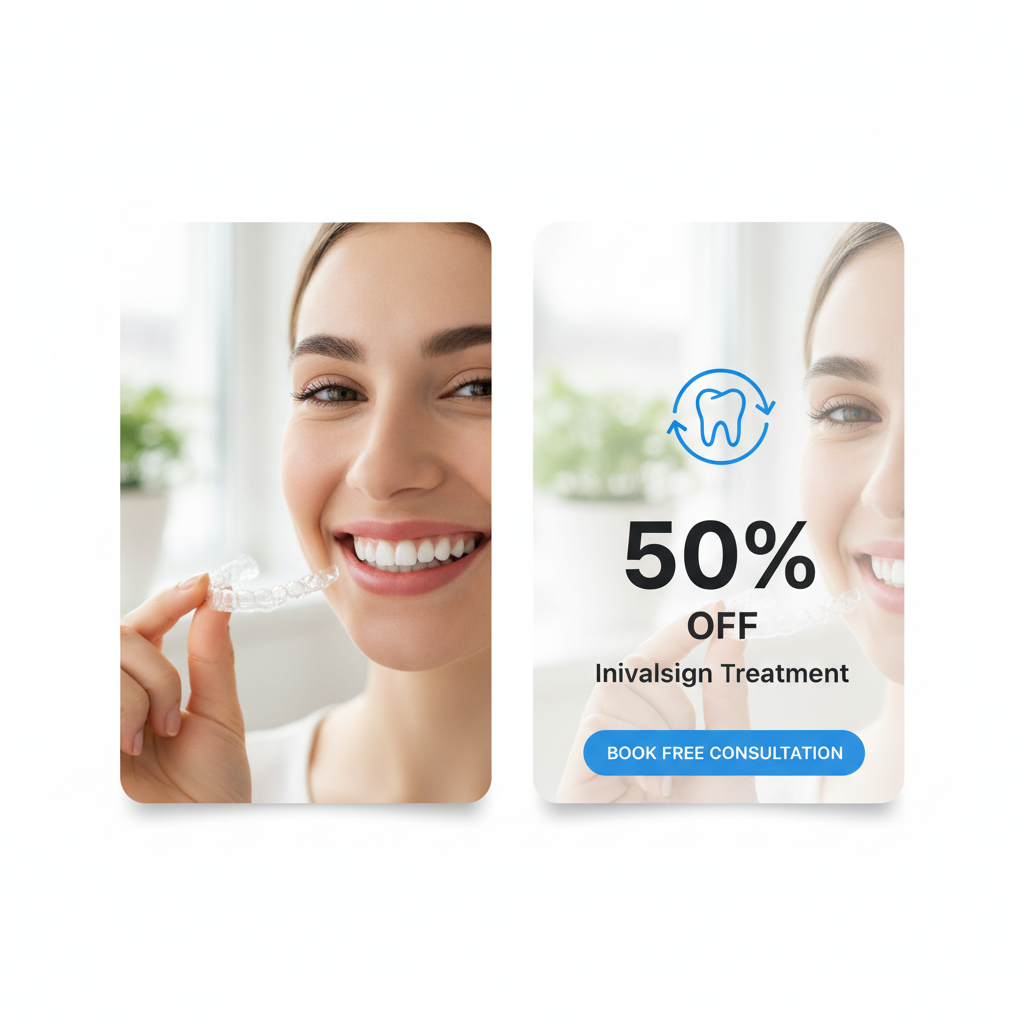
Before you spend a single dollar on ads, you need a crystal‑clear picture of who you’re trying to attract. Below are the three primary personas that dominate the Invisalign market:
- The Millennial Professional (Age 25‑38) – Career‑focused, values convenience, and is willing to pay a premium for a treatment that doesn’t interfere with work or social life. They consume content on Instagram, LinkedIn, and podcasts.
- The Parent of a Teen (Age 35‑50) – Concerned about the cost, the duration of treatment, and the impact on school life. They rely heavily on reviews, testimonials, and school‑related outreach.
- The Aesthetic‑Driven Adult (Age 40‑60) – Often seeking a smile makeover for personal or professional reasons. They appreciate detailed case studies, before‑and‑after photos, and in‑depth consultations.
By segmenting your audience, you can tailor messaging, choose the right platforms, and allocate budgets where they’ll generate the highest return on investment (ROI).
Section 2: Building a High‑Converting Website Funnel
Your website is the digital front door. A well‑optimized funnel can turn a casual visitor into a booked consultation. Follow these three pillars:
2.1. SEO Foundations
Rank for high‑intent keywords such as “Invisalign near me,” “clear aligner cost,” and “Invisalign financing options.” According to Ahrefs, the keyword “Invisalign” has a global search volume of over 1.2 million searches per month, with a click‑through rate (CTR) of ~22% for the top three organic results. Targeting long‑tail variations (e.g., “Invisalign for adults in Chicago”) can capture qualified traffic with lower competition.
2.2. Conversion‑Focused Landing Pages
Each persona deserves a dedicated landing page:
- Millennial Professional – Emphasize speed, convenience, and financing options. Include a short video testimonial from a young professional.
- Parent of a Teen – Highlight school‑friendly treatment timelines, parental financing plans, and a downloadable “Parent’s Guide to Invisalign” PDF.
- Aesthetic‑Driven Adult – Showcase before‑and‑after galleries, a detailed treatment timeline, and a free virtual smile assessment tool.
All pages should feature a single, clear call‑to‑action (CTA) such as “Schedule Your Free Invisalign Consultation” and use a Calendly or similar booking widget to reduce friction.
2.3. Trust Signals & Social Proof
In the orthodontic space, trust is paramount. Add the following:
- Verified Google and Facebook reviews (average rating >4.5).
- Before‑and‑after sliders (ensure HIPAA compliance).
- Professional affiliations (e.g., member of the American Association of Orthodontists).
- Press mentions or awards (e.g., “Top 10 Invisalign Providers in Texas”).
Section 3: Paid Advertising – Where Money Meets Measurable Results
Paid media can accelerate patient acquisition, but only when campaigns are data‑driven. Below are the most effective channels for Invisalign marketing, along with recommended budget allocations and KPI benchmarks.
3.1. Google Search Ads
Search intent is the strongest predictor of conversion. For Invisalign, the average cost‑per‑click (CPC) in the United States hovers around $4.50, with a conversion rate of 8‑12% for well‑optimized landing pages. Allocate 40% of your ad spend to high‑intent keywords and use ad extensions (call, location, sitelinks) to increase ad real‑estate.
3.2. Facebook & Instagram Advertising
These platforms excel at visual storytelling. Carousel ads featuring before‑and‑after images, combined with a lead‑generation form, can achieve a cost‑per‑lead (CPL) of $15‑$25. Target interests such as “beauty,” “fashion,” “parenting,” and specific geographic radii around your practice.
3.3. TikTok Sponsored Content
For the 18‑30 demographic, short, authentic videos perform best. Partner with local influencers who can document their Invisalign journey. Average CPM (cost per thousand impressions) on TikTok is $6‑$8, making it a cost‑effective way to boost brand awareness.
3.4. Retargeting & Look‑Alike Audiences
Set up a pixel on your website to retarget visitors who didn’t convert. A 3‑day retargeting window typically yields a 20% higher conversion rate. Additionally, create look‑alike audiences based on existing patients to expand reach.
Section 4: Content Marketing – Educate, Engage, Convert
Content positions your practice as an authority and nurtures leads through the consideration phase. Here are three high‑impact content formats:
4.1. In‑Depth Blog Series
Publish a 6‑part series covering topics such as:
- “How Invisalign Works: A Step‑by‑Step Guide”
- “Financing Options for Clear Aligners”
- “Invisalign vs. Traditional Braces: Pros & Cons”
- “What to Expect During Your First Invisalign Appointment”
- “Maintaining Oral Hygiene with Aligners”
- “Real Patient Stories: From Consultation to Celebration”
Each post should be 1,200‑1,500 words, optimized for SEO, and end with a CTA linking to the relevant landing page.
4.2. Video Testimonials & Virtual Consultations
Video content drives 2‑3× higher engagement than text alone. Create:
- Patient interview clips (30‑60 seconds) focusing on pain points and outcomes.
- Live Q&A sessions on Instagram Live or Facebook Live, answering common Invisalign questions.
- Animated explainer videos that demystify the aligner manufacturing process.
Host the videos on YouTube and embed them on your site to improve dwell time and SEO.
4.3. downloadable Guides & Interactive Tools
Offer a “Free Invisalign Cost Calculator” that estimates treatment price based on age, severity, and financing options. Require an email address to deliver the results, feeding your nurture email sequence.
Section 5: Email Nurture Sequences – Turning Leads into Appointments
Once you capture a prospect’s contact information, a well‑orchestrated email series can move them toward booking. A typical 5‑email sequence includes:
- Welcome & Thank‑You – Deliver the promised guide or calculator results.
- Education – Share a blog post about the Invisalign process.
- Social Proof – Highlight a recent patient success story with photos.
- Financing Options – Explain payment plans, insurance coverage, and any promotional discounts.
- Strong CTA – Offer a limited‑time free consultation or a “Bring a Friend” discount.
According to HubSpot, email nurture sequences can increase conversion rates by up to 30% compared with single‑step contact forms.
Section 6: Offline Tactics – Bridging Digital and Physical Touchpoints
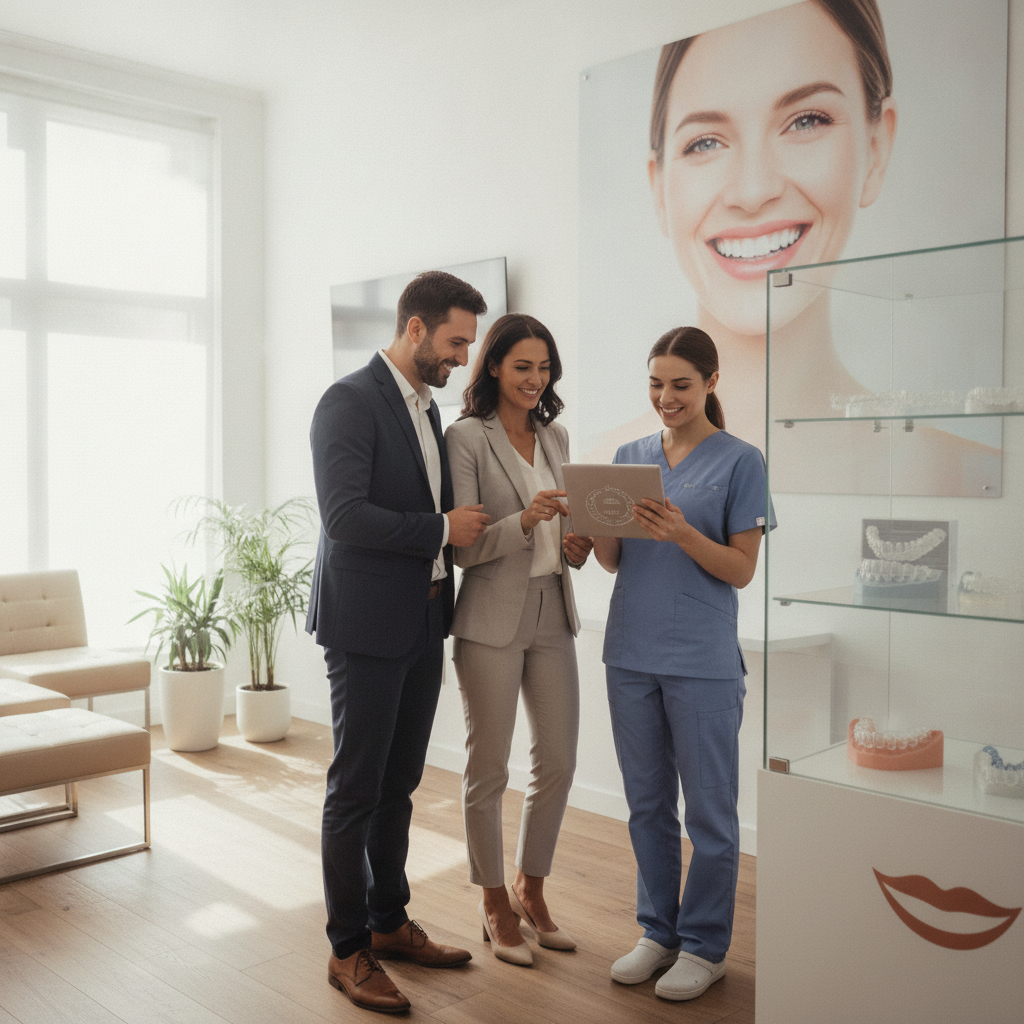
Even in a digital age, traditional marketing still drives traffic, especially for local practices.
6.1. Community Workshops & School Partnerships
Host a “Smile Night” at local high schools where parents and teens can learn about Invisalign. Offer a complimentary oral health kit for attendees. Schools appreciate educational value, and you gain direct access to the parent demographic.
6.2. Direct Mail with QR Codes
Send a sleek postcard featuring a before‑and‑after image and a QR code that leads to a personalized landing page. Direct mail response rates for dental practices average 2.5%—significantly higher than the industry average of 1.5%.
6.3. Referral Programs
Reward existing patients with $100 credit for each new patient they refer who completes an Invisalign consultation. Referral traffic typically yields a 20‑30% higher lifetime value.
Section 7: Real‑World Case Studies
Below are three anonymized case studies that illustrate how the strategies above translate into measurable growth.
Case Study 1: Urban Orthodontics – 150% Increase in Leads in 6 Months
Background: A downtown practice serving young professionals was struggling to differentiate from nearby competitors.
Strategy Implemented:
- Created a dedicated “Millennial Professional” landing page with a short video testimonial.
- Launched a Google Search campaign targeting “Invisalign financing” and “clear aligners near me” with a $4,500 monthly budget.
- Ran Instagram carousel ads featuring lifestyle images and a lead‑gen form.
Results:
- Monthly leads rose from 12 to 32 (a 166% increase).
- Cost‑per‑lead dropped from $45 to $22.
- Revenue from new Invisalign patients grew by $78,000 over six months.
Case Study 2: Suburban Family Dental – Boosted Teen Appointments by 85%
Background: A family‑focused practice needed to capture more teen patients during the back‑to‑school period.
Strategy Implemented:
- Partnered with three local middle schools to host free “Smile Check‑Ups”.
- Distributed QR‑code postcards to parents with a link to a teen‑focused landing page.
- Used Facebook Lead Ads targeting parents ages 35‑50 within a 15‑mile radius.
Results:
- Teen Invisalign consultations increased from 8 to 15 per month.
- Average treatment start‑up value per teen rose to $4,800.
- Overall practice revenue grew by 12% during the campaign period.
Case Study 3: Luxury Smile Studio – Positioning as a Premium Brand
Background: An upscale practice wanted to attract high‑net‑worth adults seeking aesthetic dental solutions.
Strategy Implemented:
- Developed a high‑production video series showcasing before‑and‑after transformations.
- Invested in LinkedIn Sponsored Content targeting professionals earning >$150k.
- Implemented a personalized email nurture sequence with exclusive financing offers.
Results:
- Cost‑per‑acquisition (CPA) for premium patients was $1,200, well below the $2,500 target.
- Average case value reached $9,200, a 35% increase over the previous year.
- Patient satisfaction scores (NPS) climbed from 68 to 82.
Section 8: Measuring Success – KPIs Every Invisalign Marketer Should Track
Without proper measurement, even the best strategies can’t be optimized. Focus on these core metrics:
| KPI | Definition | Target Benchmark |
|---|---|---|
| Cost‑Per‑Lead (CPL) | Total ad spend ÷ Number of qualified leads | $15‑$30 (depending on channel) |
| Lead‑to‑Appointment Conversion Rate | Leads that schedule a consultation ÷ Total leads | 25%‑35% |
| Appointment‑to‑Treatment Conversion Rate | Consultations that result in an Invisalign start ÷ Total consultations | 55%‑70% |
| Average Revenue Per New Patient (ARPNP) | Total revenue from new Invisalign patients ÷ Number of new patients | $6,500‑$9,000 |
| Return on Ad Spend (ROAS) | Revenue generated ÷ Advertising spend | 4:1 or higher |
Use Google Analytics, the Invisalign Provider Portal, and your practice management software to pull these numbers on a weekly basis.
Section 9: Frequently Asked Questions (FAQ)
- Q1: How long does an Invisalign treatment typically last?
- A: Most cases are completed in 12‑18 months, though complex movements may require up to 24 months. The exact timeline is determined during the digital treatment planning stage.
- Q2: Is Invisalign covered by dental insurance?
- A: Many dental insurance plans treat Invisalign as an orthodontic benefit, covering 50%‑80% of the cost up to a lifetime maximum. Our staff can verify coverage and submit claims on your behalf.
- Q3: What financing options are available?
- A: We partner with CareCredit, Invisalign’s own financing program, and offer in‑house payment plans with 0% interest for up to 12 months. Special promotional rates are also offered seasonally.
- Q4: How often do I need to wear the aligners?
- A: For optimal results, aligners should be worn 20‑22 hours per day, only removing them for meals, drinks (except water), and oral hygiene.
- Q5: Will I need to see the dentist frequently?
- A: Typically, patients have a virtual check‑in every 6‑8 weeks and an in‑office visit only once or twice for progress photos and any necessary refinements.
- Q6: Can I combine Invisalign with other dental procedures?
- A: Yes. Many patients coordinate teeth whitening, veneers, or bonding after or during their Invisalign treatment to achieve a comprehensive smile makeover.
- Q7: How do I know if I’m a good candidate?
- A: Most mild to moderate malocclusions are treatable with Invisalign. Our digital scanning technology provides a quick eligibility assessment during the initial consultation.
Having clear, concise answers to these common concerns reduces friction and helps prospects move faster through the decision funnel.
Conclusion: Turning Strategy into a Steady Stream of Invisalign Patients
Effective Invisalign marketing is a blend of data‑driven digital tactics, compelling storytelling, and community‑focused outreach. By understanding your target personas, optimizing every step of the online funnel, leveraging paid media wisely, and nurturing leads with personalized content, you can consistently attract high‑value patients.
Remember to test, measure, and iterate. The orthodontic market evolves quickly—what works today may need tweaking tomorrow. With the framework outlined above, your practice will be equipped to stay ahead of the competition and grow sustainably.
Further reading
- Related insights from our team — more on Proven Invisalign Marketing Strategies to Attract More Patients.